
Growth Lives in the Feedback Loops
Recently, a curious parent on a tour had a lot of good questions: how do children relate to technology? How did the children relate to their goal-setting process? How do the children relate to the very individualistic idea of a hero's journey within a greater community of people? How do they balance their needs with the needs of others? There was a clear thread throughout all of my answers: reflection and feedback.
When people ask what makes Ascent different, the question is often initially focused on what they can see. We use project-based learning, we prioritize time outside, we incorporate Montessori materials and adaptive technology, we hold Socratic discussions… however, none of these pieces are unique to us.
What gives each tool, process, or framework weight is the reflection that surrounds them.
Our learners live inside feedback loops. They are not occasionally reflecting; they are practicing reflection throughout the day in both obvious and subtle ways.
In their work, they use the Challenge Donut to clarify the real challenge they are facing and the skills required to rise to it. They publicly reflect on their SMART goals each day, naming whether they completed them, exceeded them, or did not begin. They check in with guides on core skills and badges, answering questions like: “Are you avoiding this because you hit a roadblock, or because you are more motivated by something else right now?” They give and receive peer feedback during the writing process and on each other’s submitted badges work. They pitch books to a panel for approval and practice presentations in front of large groups- seeking public feedback for improvement. In Spark, they hold one another accountable for how materials are used and how their campus is cared for.
In their personal growth, they regularly reflect on the Three Monsters of the Hero’s Journey: victimhood, resistance, and distraction. They learn to recognize which one they are facing and how to respond with proactivity, courage, or focus. Each session, they participate in a 360 feedback cycle. Before giving feedback, they revisit their contract and discuss what responsible feedback looks like. They name the responsibility of the giver to avoid labeling and to speak in growth-oriented ways. They name the responsibility of the receiver to resist slipping into victimhood and to treat feedback as a challenger rather than a persecutor. After receiving feedback, they reflect on what was most helpful, least helpful, hardest to hear, and then they set a personal growth goal from it. In these moments, they are proactive heroes and not victims reacting to critique.
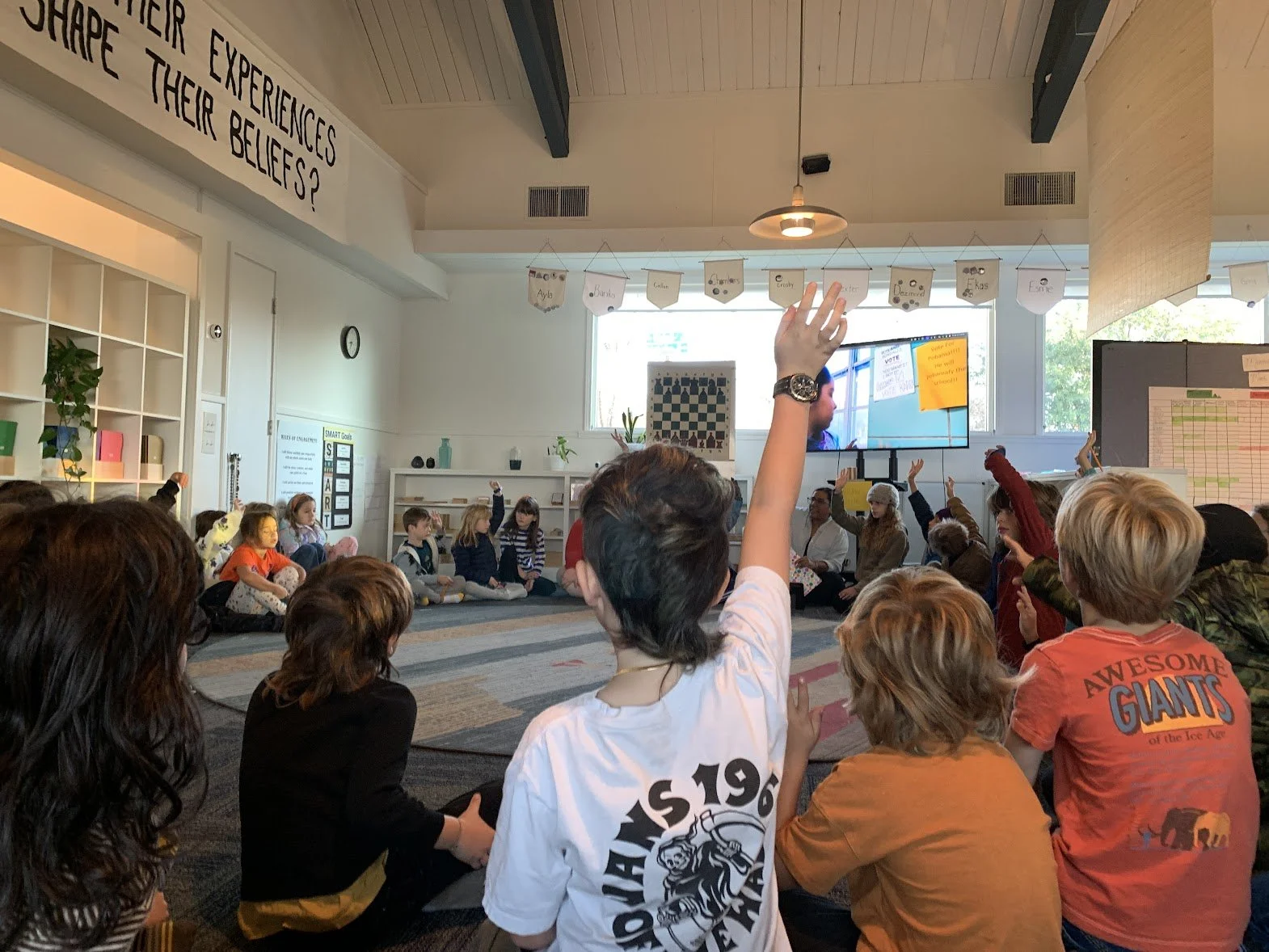
Public Exhibitions and Showcases are not celebrations of work- they are public reflection points. Learners share what they completed and what they did not, speaking about failures and adjustments to the community. In Explore, they level up the process by answering tough questions from an audience that holds them accountable in a warm-hearted but serious way.
In the realm of community and culture, they participate in conflict resolution processes that allow them to hear how they have impacted someone else and to repair harm. They hold discussion rules of engagements and contracts. In older studios, systems like Hero Bucks reinforce accountability. When boundaries are crossed, there is no punishment theater; instead, there is guided reflection and a plan for change. These are all small moments of feedback, followed by moments of reflection, and they occur every day.
Socratic discussions deepen all of this. Learners wrestle with moral dilemmas, tough situations, and big ideas. Through reflection, they practice clear thinking. This is the foundation of our learning philosophy: We believe clear thinking leads to good decisions, good decisions lead to the right habits, habits form character, and character shapes destiny.
At the end of the day, our learners are reflecting constantly. Not occasionally, not at the end of a semester, but throughout the day in both structured and subtle ways. Because of that repetition, they become genuinely skilled at giving and receiving feedback. Most adults will admit that this is not something we do particularly well. We either avoid hard conversations, personalize what we hear, or defend ourselves before we’ve truly listened.
The ability to receive feedback without collapsing into shame or rising into defensiveness is a life skill that requires rigorous and regular practice.
Learning to use feedback as fuel for growth rather than as evidence of victimhood may be one of the most important capacities our learners develop here.
Over time, this kind of disciplined self-examination produces something rare. Our learners leave with a grounded sense of who they are. They know their strengths and they know their growth edges, and they can speak about both without embarrassment or posturing. There is a matter-of-fact ownership that emerges from this work. It builds a confidence that is steady rather than performative, assured but not arrogant, humble without being insecure. Out in the ‘real world’ it’s less common to find people who can reflect deeply on themselves, adjust their behavior, and continue forward without drama. That strength is not accidental; it is practiced. It is also what gives depth to everything we do. Technology without reflection can easily distort. Project-based learning without deeper processing can remain surface-level. Tools only become transformative when a learner knows how to relate to them thoughtfully.