Report Cards and the Stories We Tell
On a Monday morning last spring, Janita brought in her 4th grade report card. She pulled it from a box of memorabilia and a collection of Chess trophies and adorable pictures her parents sent her.
I’d never seen a grade school report card before because my school didn’t have report cards or grades, so I started reading it out loud. At first, we laughed. Mostly A’s and B’s, one “unfair” B-.
Then the laughter softened into confusion. “Wait,” I asked, “how did the teacher decide this?”
Then I reached the comments section.
“Janita is polite, poised, and happy.”
Hold on. How did they know she was happy? Did they ask?
The next line, from the following grading period, read:
“Janita needs to remember to indent new paragraphs.”
That’s the headline? Of all the things worth telling a parent about their child, that was the most important??
Then came the follow-up: “She really wants to learn and is very inquisitive.”
“Did your parents need a teacher to tell them that?” I asked. Because I can’t imagine many parents being unsure about their child’s curiosity until another adult validates it.
But then Janita said, “and by then I wasn’t really very inquisitive anymore. Not at that age.”
And that’s when the air shifted.
Because when these comments are written down with such assurance, they become fact, even when they aren’t true. They start to define the child, the family, and the story everyone believes.
By the third grading period, the teacher wrote:
“Janita is doing very well. I can’t ask for a better student. You can be proud of her.”
Permission to be proud… granted by a teacher.
And finally, the fourth quarter:
“Janita will be an excellent student in future grades. She is sincere, kind, and enjoys life. You are good parents who guide her and place responsibility on her.”
How could they possibly know she “enjoys life”? Or that she will be a good student? Who decides that and when?
Each line sounds kind and affirming on the surface, but taken together, they form a box. A tidy little summary of who a child is and who she will be. A story that, once written, becomes hard to rewrite.
And when the words come from an authority figure, they stick, even when they’re wrong.
Janita remembers those comments all these years later- the ones that were off, the ones that became part of her identity, the ones that made her wonder who she was allowed to be.
When we finished reading, our first reaction was: This is what a lot of parents want. It’s not a judgment, just an honest realization.
It’s comforting to have an adult say, “Your child is kind,” or “You can be proud,” or “You’re doing it right.” It feels safe. It feels clear. It gives a sense of control in a world that feels uncertain.
But it isn’t real.
No teacher, no report card, no checklist can capture the vastness of who a child is becoming.
To be clear- this is not a knock on teachers or the important work they do. Janita had wonderful teachers who surely worked very hard and cared deeply about their students. It’s that the very system invites adults to decide who a child is, and to tell parents who they should be. And it’s a system that conditions us to seek external validation to determine who we are.
What if this report card had been filled with the opposite? The not enoughs instead of the so goods? The response from parents might have been different. What if it said, “Doesn’t focus.” “Talks too much.” “Needs to apply herself.” Is there also comfort in having someone else identify and label your faults? That’s a responsibility that can be hard to hold as an individual or a parent.
Whether flattering or critical, these judgments carry the same risk: they tell a child who they are, instead of asking who they’re becoming.
What We’re Building Instead
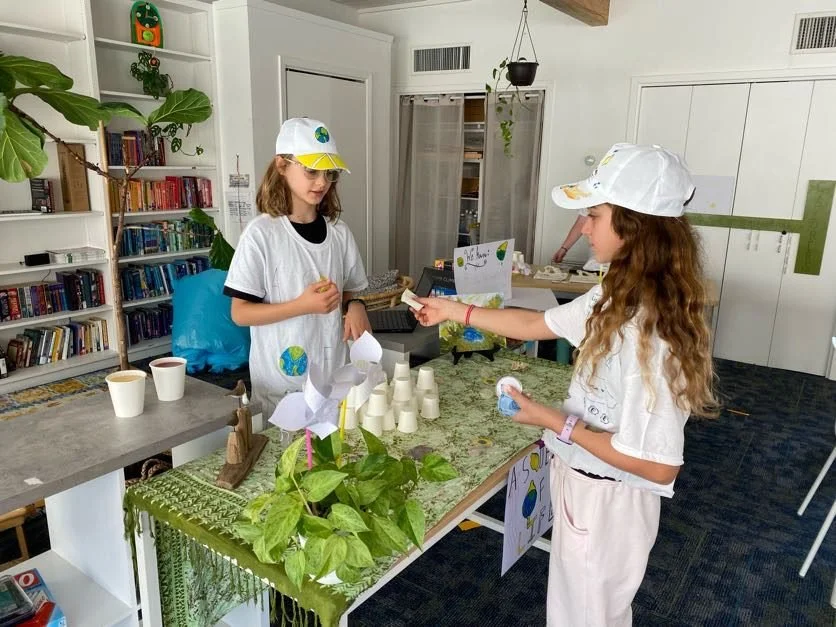
At Ascent, we’re building something different, a culture of introspection and reflection. Instead of adults writing narratives about children, learners write their own through goal-setting, feedback, and honest self-assessment. Progress is measured in real-time growth and demonstrations of effort and excellence. It’s measured by our philosophy of learning:
Clear thinking leads to good decisions,
Good decisions lead to the right habits,
The right habits lead to character and
Character becomes destiny.
Their stories are dynamic, alive, and still unfolding. When children see themselves as authors of their own journey, they don’t wait for someone else to decide who they are and who they want to become.