Explore: Y7, S6, W2
Humans, Energy, and the Question of Fire
Click here to see pictures from this session.
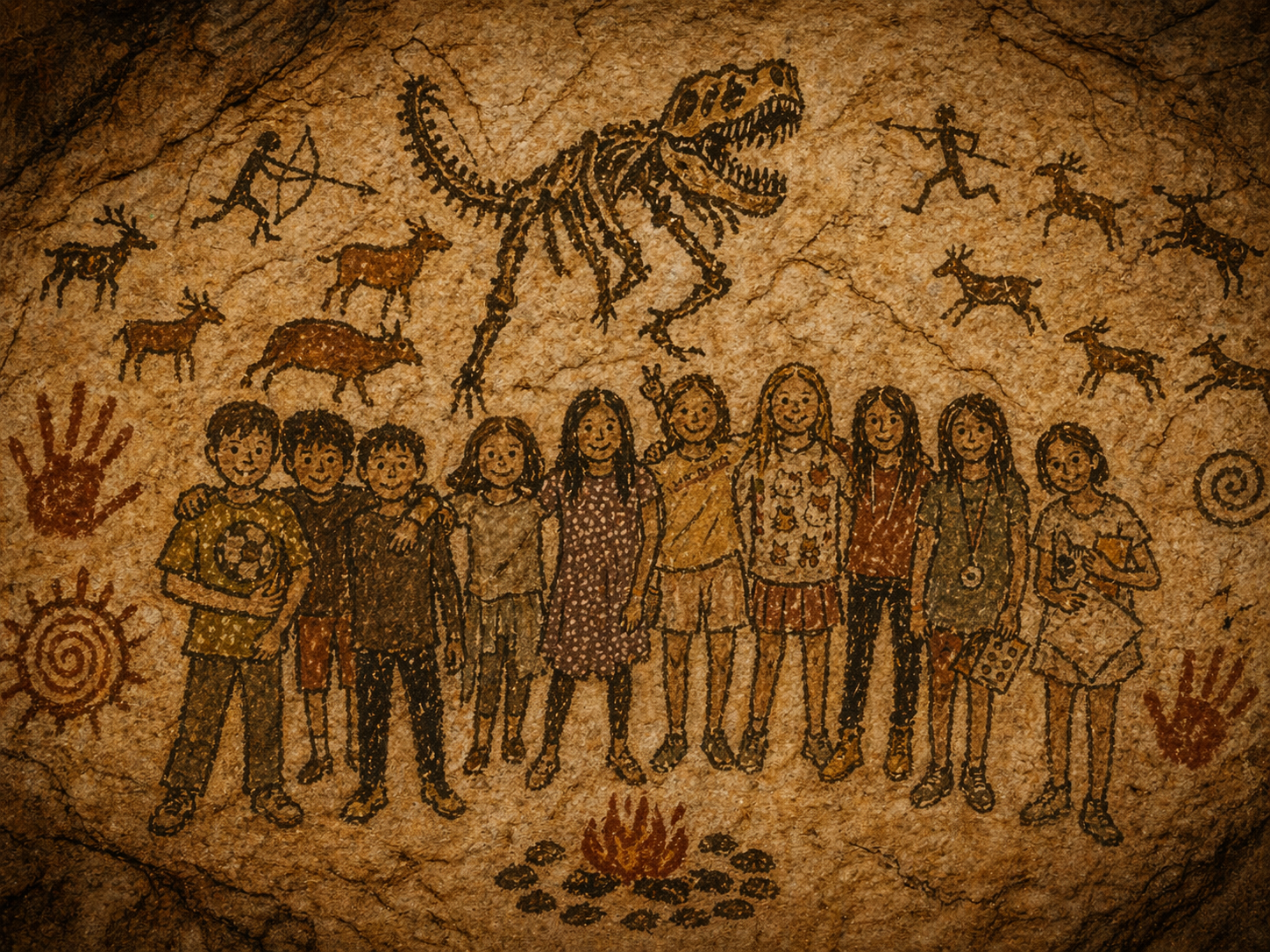
This week, Explorers traveled back to the Middle Paleolithic Era, stepping into the lives of hunter-gatherers and asking a deceptively simple question: How did early humans find, use, and transform energy?
The week began with a launch that asked learners to consider their own diets compared with those of early humans. Would they thrive as hunter-gatherers? Would they choose the same foods? These questions stayed with them as they moved into both research and embodied experiences.
By midweek, learners were no longer simply discussing early humans; they were testing whether they could survive as them.
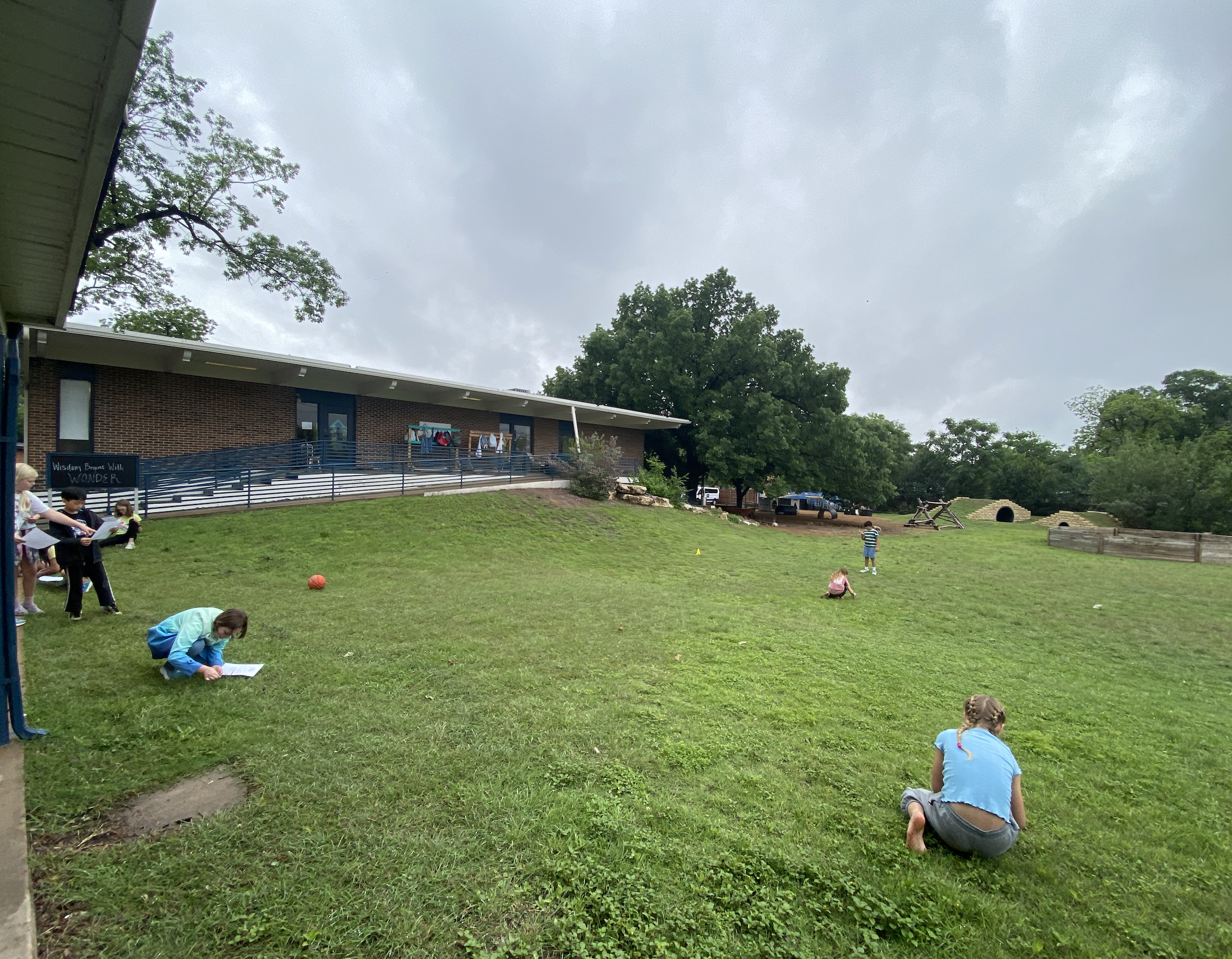
During Wednesday’s Hunter-Gatherer Challenge, learners worked through a sequence of physical and strategic tasks that mirrored the realities of early human life. They gathered plant energy by picking blades of grass one by one and sitting in place to simulate the time required to chew raw plants. They hunted by throwing at distant targets, requiring both patience and accuracy. They attempted to start and sustain fire, ran to escape predators, fished under constraints, and built shelters that could withstand disruption.
What became clear quickly was how much effort it took to simply maintain energy. Many learners noticed the imbalance between effort and reward, especially when comparing plant gathering to hunting. Others began to see how critical planning, teamwork, and adaptability were to survival. The experience sparked deep reflection during the debrief: was survival more about endurance or creativity? Strength or strategy?
Alongside this, learners carried this lens into their outing at the Texas Science and Natural History Museum. There, they encountered fossils and taxidermy that made Texas's history tangible. Some learners chose to move independently through exhibits, lingering at interactive displays and following their own curiosity. Others took on the museum’s scavenger hunt with urgency, working in teams to complete it as efficiently as possible. Both approaches revealed something important. Some learners are refining their ability to direct their own exploration, while others are sharpening collaboration and execution under pressure.
Back in the studio, the question of energy evolved into a deeper inquiry: What is fire?
On Friday, learners engaged in a series of experiments designed to test two competing ideas. Is fire something that is released, like juice from an orange or a peanut from its shell? Or is it a reaction, something new that forms when conditions are right?
They ran electric currents through salt water and watched gases form and collect. They set up long-term observations of iron, water, and oxygen to track changes over time. In contrast, they released substances by squeezing oranges and cracking peanuts, noticing the difference between something being revealed versus something entirely new being created.
Using these experiences, learners worked through a reaction-versus-release framework, observing whether new substances formed, whether anything disappeared, and whether temperature or color changed. The goal was not to be told the answer, but to build a theory grounded in evidence.
In Growing Curiosity, learners shifted from participants to designers. In new teams, they were given five possible themes and tasked with aligning on one, then designing a full week of learning for the Discovery Studio. This required negotiation, clarity of vision, and the ability to move from ideas to structure. The conversations here were telling. Learners had to advocate, listen, and ultimately commit to a shared direction.
We are also beginning to see a shift in our oldest Explorers. As they prepare for their transition to Peak Junior High, there is a growing seriousness in how they approach their work. Part of this transition includes preparing for apprenticeships, where learners are responsible for seeking out, securing, and following through on real-world work experiences. This is not a simulated exercise. It requires initiative, communication, and ownership. The seeds of that independence are visible now in how they manage their time, set goals, and engage with challenges.
Physical Development continued to be a highlight of the week. Early rain pushed workouts indoors, requiring flexibility and adaptability. By Thursday, the energy shifted back outside, and basketball returned in full force. The difference was noticeable. Learners who had navigated constraints earlier in the week stepped into the court with renewed focus and intensity.
Across all of this, a consistent thread emerged: energy is not just something we consume. It is something we must understand, manage, and transform.
From chewing grass to cooking food, from running from predators to designing learning experiences, learners are beginning to see how deeply this concept shapes both survival and growth.