In the Discovery and Explore studios, one of the skills practiced every day is being part of a Socratic discussion. This practice embodies many areas of growth that are foundational to what we do at Ascent.
Systems come and go, the schedule changes often, but some things always stay the same, one of which is our commitment to daily discussions.
Before we dive into what happened last week (!), here are some quick FAQs:
What does a Socratic discussion at Ascent look like?
You’ll see a group starting on time in a circle for a 15 minute discussion where only A/B forced-choice questions are asked and puts participants in the tough position to take a stand and defend it. Discussions vary but most put learners in the shoes of heroes facing a difficult decision. They discuss current events, grapple with challenges in their studio culture, and share reflections about their lives.
Why is it such an important part of the daily schedule?
Because we believe that:
Clear thinking leads to good decisions,
Good decisions lead to the right habits,
The right habits lead to character and
Character becomes destiny.
The goal in a Socratic discussion is not to get an answer right or get too caught up in the content, but to be focused on the process and mental-muscle building that comes with this level of participation. An active facilitator is listening to find follow-up questions that allow for further critical thinking and raise the stakes. The three main purposes of a Socratic discussion in this environment are to inspire, equip and/or connect.
Who participates?
Facilitator– more often than not a guide, but often led by learners.
All of the learners in the studio– the collective expectation is that everyone participates in this important process.
Our Learn to Be Badges invite learners to develop new skills in planning and leading Socratic discussions—giving them a chance to step into the role of supporting others and serving their studio in this unique way.
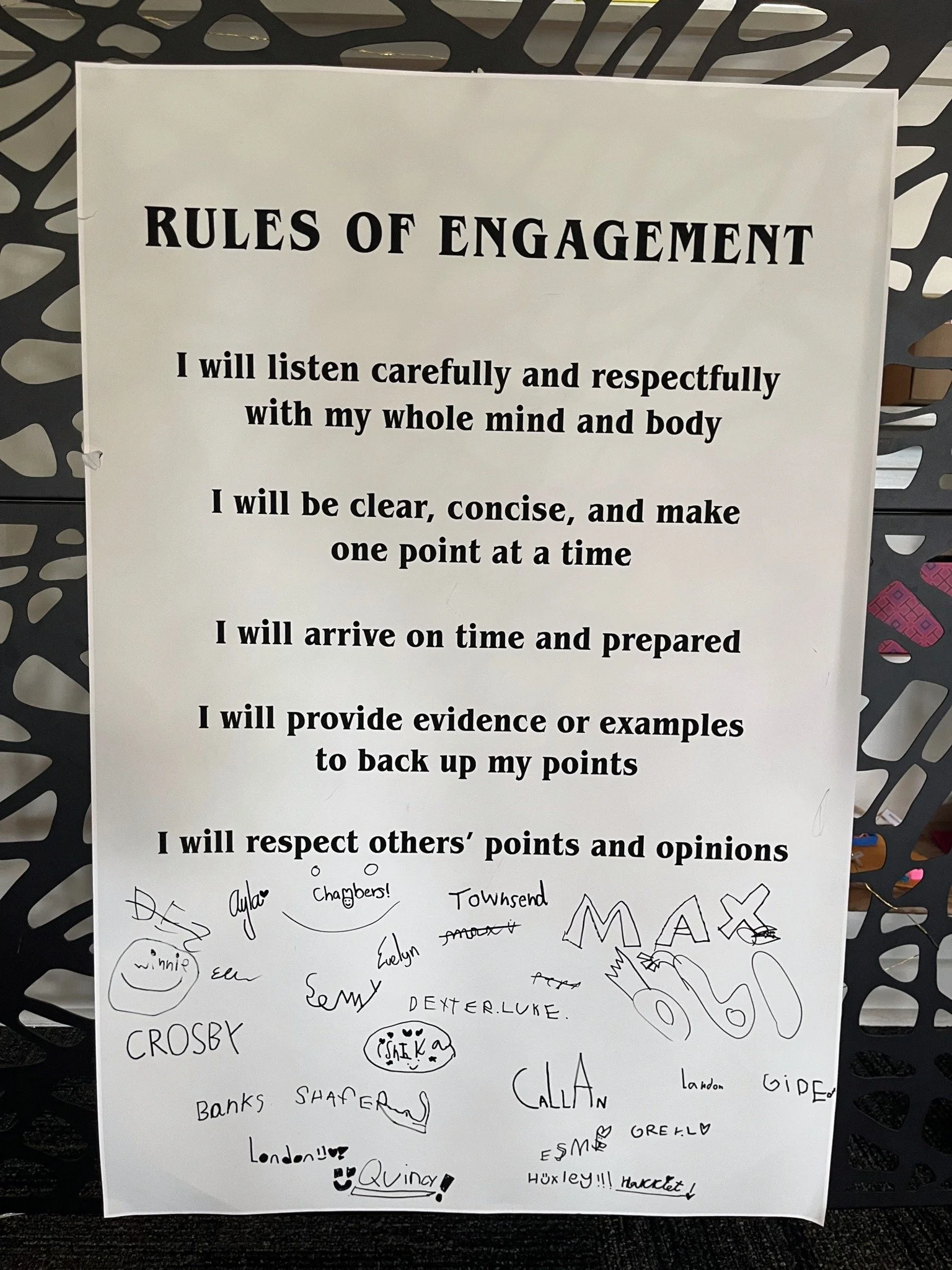
In a Socratic discussion, learners are held accountable to being on time and prepared and to holding their Rules of Engagement- which require intentional, daily practice.
When does it happen?
3-4 times per day. Like clockwork!
The morning or post lunch discussion is often called a “launch” as it is launching you with intention into the next part of one’s day.
Last Tuesday was the apex of a beautiful and intentional (and long) window of processing about what it means to hold and live up to the standards they have committed themselves to.
At the end of the previous day, a reflection about the quality of discussions yielded two main areas of feedback from learners-
“We could do better at responding to the five-minute and three-minute signals” (these are the learner-created signals that are rung as ‘warning bells’ prior to a discussion to indicate it’s time to get prepared).
“Guides could follow through with removing a Hero Buck when someone breaks the contract” (the agreed upon accountability tool that asks a guide to follow through ‘on the back end’ of the process, simply because of how the system is currently structured).
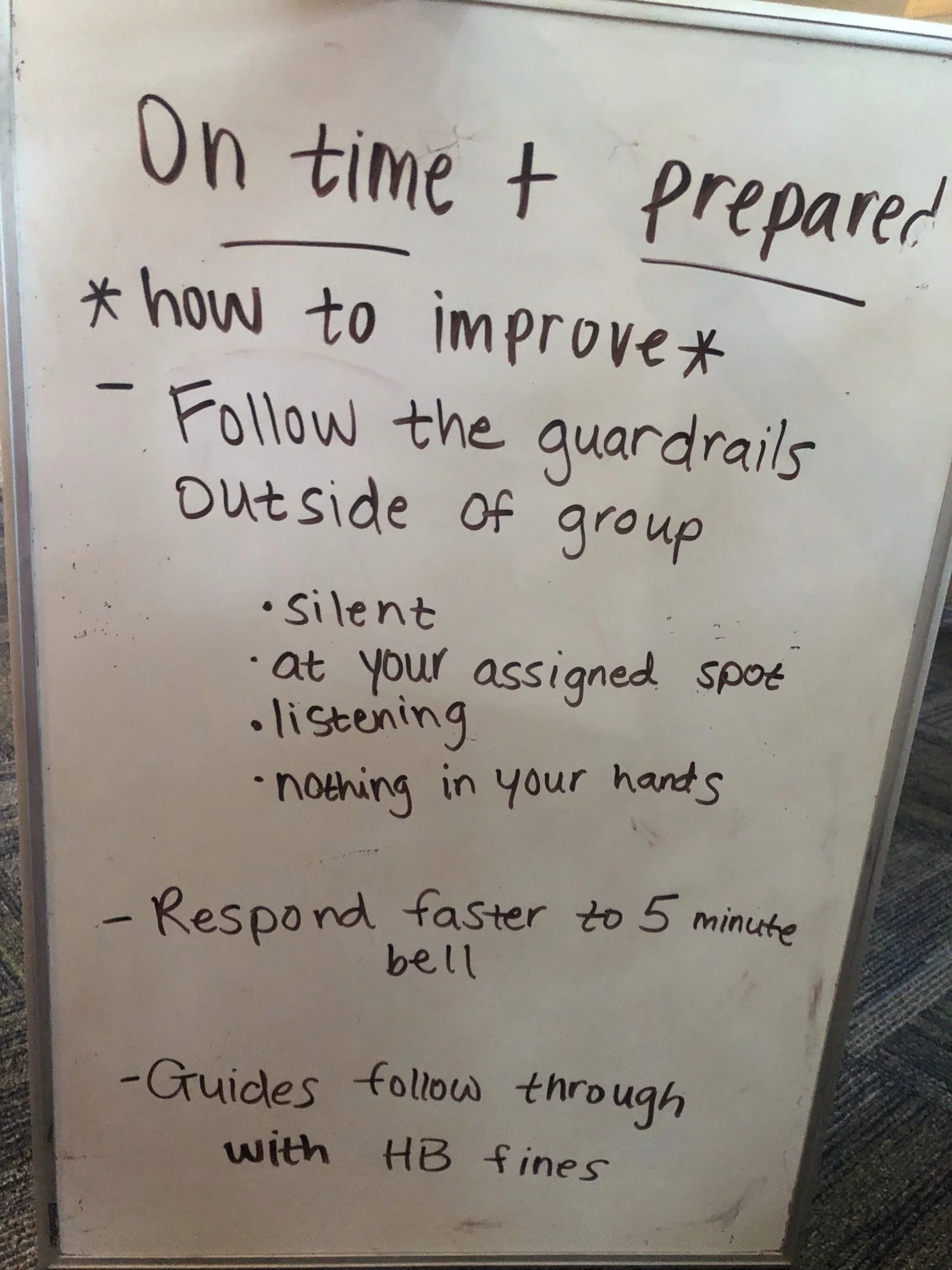
After that reflection early last week, here’s what the discussions looked/sounded like.
Is this a moment to celebrate? Absolutely.
This is the culmination of months of practice and reflection, with success and failures along the way, as individuals and as a studio. It was also a powerful moment of learner-to-guide feedback and accountability.
Will it always be this way? Absolutely not. And that’s the beauty of this real world experiment and experience; the journey is the real destination. When discussion culture needs rebuilding again, we’re here for it. But in this window, we celebrate a nearly year-long effort together.
DROEs (Discussion Rules of Engagement, drafted and ratified Fall 2024)